Edmonia Lewis: Said in Stone

Panel Discussions: Research, Materiality and the Archive

How do we reconstruct the history of an artist when the traditional archives are silent? Two panels pull back the curtain on the detective work, technical analysis and digital innovation behind the exhibition.

Time until the program begins

0days
00hours
00minutes
00seconds

Friday, November 6, 2026, 1 p.m. Eastern

Not live Checking stream…

Support the museum

Help the Georgia Museum of Art bring exhibitions and programs like this one to the community.

Program

1 – 2:15 p.m.

Panel 1: Navigating Archival Absence: Research, Recovery, and Curatorial Practice

Curating a major retrospective for an artist as complex as Edmonia Lewis requires both scholarly rigor and a creative approach to historical absence. This roundtable addresses the practical and philosophical challenges of building an exhibition from a scattered record, exploring how curators reconcile missing details with material evidence. Panelists will share breakthroughs in archival recovery methods, use of contemporary artistic responses and perspectives on Lewis, as well as their unique outlook on future research.

Co-curators Shawnya Harris and Jeffrey Richmond-Moll will be joined by Melissa Ragain, associate professor of art history at Montana State University and contributor to the “Said in Stone” catalogue. Ragain recently curated “Chisel & Razor: The Artistic Legacies of Edmonia & Samuel Lewis,” a two-part exhibition at Tinworks Art and the Museum of the Rockies exploring the intersecting legacies of Edmonia Lewis and her brother Samuel, who lived in Bozeman, Montana.
2:30 – 3:45 p.m.

Panel 2: Science of the Stone: 21st-Century Tools and 19th-Century Marble

How do art historians use modern conservation methods and technology to unlock the secrets of 19th-century sculpture? This session explores the intersection of material science and art history. Objects conservator Amy Jones Abbe presents her technical study of Lewis’ sculptures based on Henry Wadsworth Longfellow’s epic poem “The Song of Hiawatha” and the intensive conservation treatment of “Cupid Caught” in conversation with exhibition co-curator Jeffrey Richmond-Moll. They will explain how the various technologies used during the research for this exhibition shed new light on Lewis’s overarching artistic contribution and the physical nature of her sculpture.

About the exhibition

The panels accompany “Edmonia Lewis: Said in Stone,” on view at the Georgia Museum of Art.

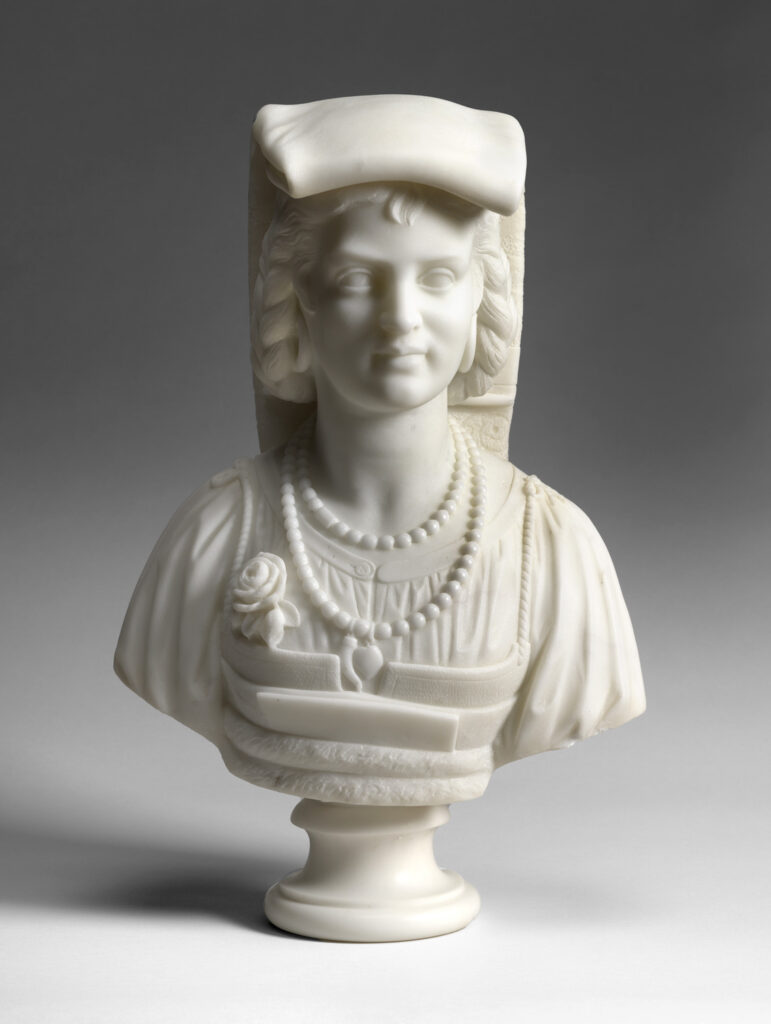
  • Marble bust of a young woman wearing a folded cap and bead necklaces
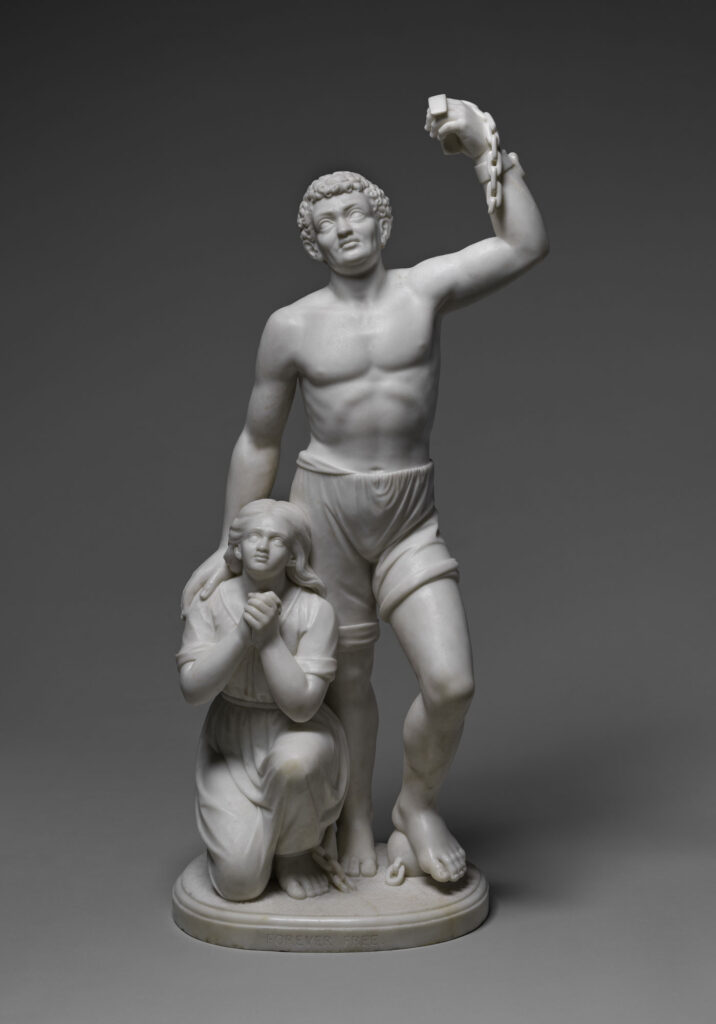
  • Forever Free, a marble sculpture of a standing man raising a broken chain beside a kneeling woman
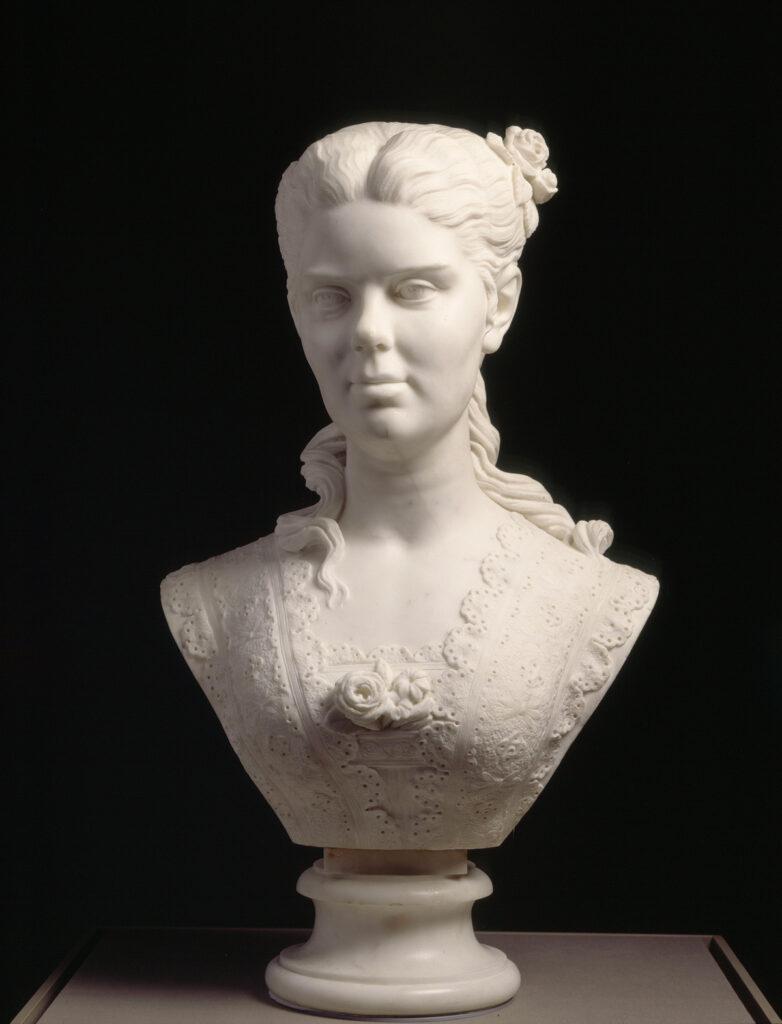
  • Marble bust of a woman with swept-back hair, a rose, and a lace-trimmed bodice
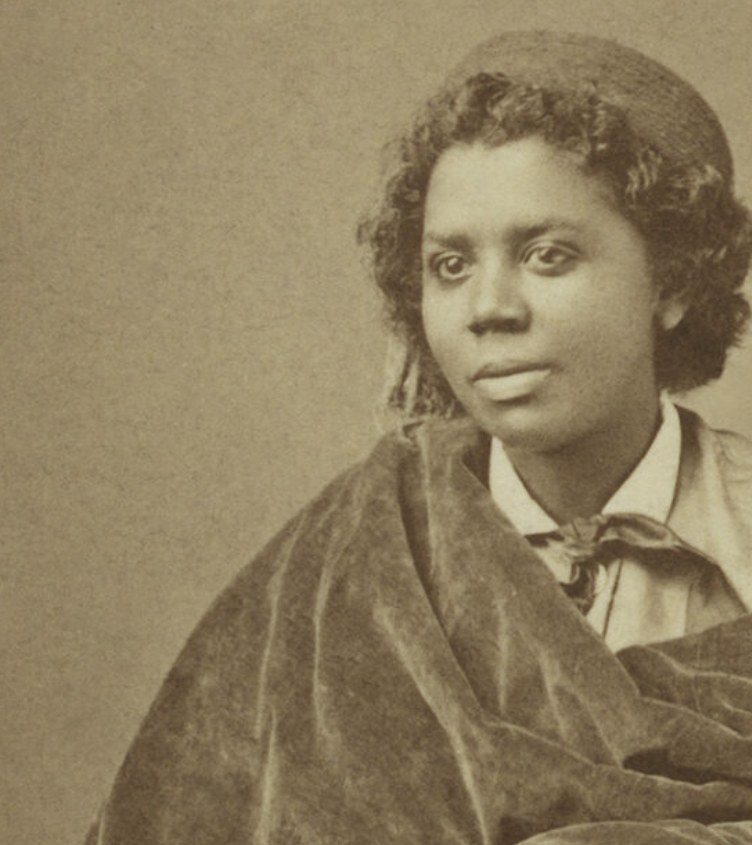
Historic studio portrait photograph of Edmonia Lewis, wearing a velvet cloak over a collared blouse with a bow

Breaking barriers

Born in Greenbush, New York, in 1844, Lewis became the first sculptor of Black and Indigenous (Mississauga) descent to achieve international recognition. Beginning her career in Boston in 1863, she traveled to Rome in 1866 to join the leading American sculptors of her generation, breaking international, racial and gender barriers.

“Sometimes the times were dark and the outlook was lonesome, but where there is a will, there is a way,” Lewis recalled in 1878. “That is what I tell my people whenever I meet them, that they must not be discouraged, but work ahead until the world is bound to respect them for what they have accomplished.”

Following her death in 1907, Lewis’ legacy endured in Black communities yet her contribution to American sculpture has largely been underrecognized. Some of her great masterpieces were rediscovered decades later, while others remain lost today.

Her vivid, naturalistic stone sculptures feature abolitionists and social reformers, engage with Indigenous identity and give new life to religious and mythological figures.

Discover the first museum exhibition of its kind to gather the full range of Lewis’ art alongside works by her contemporaries and the generations of artists she influenced. Together these objects foreground Lewis’ life and work within her worlds and reveal her true mastery of marble.

“Edmonia Lewis: Said in Stone” is co-organized by the Georgia Museum of Art at the University of Georgia and the Peabody Essex Museum. Major support is provided by the Terra Foundation for American Art, the Henry Luce Foundation and the Wyeth Foundation for American Art. Additional support is provided by Traditional Fine Arts Organization.

The exhibition opened at the Peabody Essex Museum (February 14 – June 7, 2026) and will travel to the North Carolina Museum of Art (April 3 – July 11, 2027) after its run at the Georgia Museum.